
Understanding Lawn Aeration and Scarification Techniques for Effective Lawn Improvement Methods
A lush, green lawn is the pride of many homeowners. But achieving that perfect carpet of grass takes more than just watering and mowing. Two essential techniques that can transform your lawn’s health and appearance are aeration and scarification. These processes might sound technical, but they’re straightforward and incredibly effective when done right. Today, I want to walk you through these lawn improvement methods, explain their benefits, and help you decide which one your garden might need.
What Are Lawn Improvement Methods and Why Do They Matter?
Lawn improvement methods are practices designed to enhance the health, growth, and appearance of your grass. Over time, lawns can become compacted, clogged with dead material, or suffer from poor drainage. This leads to patchy grass, weak roots, and a lawn that just doesn’t look its best.
Two of the most popular and effective methods to tackle these issues are aeration and scarification. Both aim to improve the soil and grass conditions but do so in different ways:
Aeration involves creating small holes in the soil to allow air, water, and nutrients to penetrate deeper.
Scarification removes thatch - the layer of dead grass, roots, and debris that builds up on the soil surface.
By regularly applying these techniques, you can breathe new life into your lawn, making it more resilient and vibrant.

Caption: Aeration helps improve soil breathing and nutrient absorption.
How Lawn Aeration Works and When to Do It
Aeration is like giving your lawn a deep breath. Over time, soil compacts due to foot traffic, weather, and mowing. This compaction restricts root growth and reduces the soil’s ability to absorb water and nutrients. Aeration solves this by poking holes into the soil, usually with a machine that pulls out small plugs of earth.
Benefits of Aeration:
Improves oxygen flow to roots
Enhances water absorption, reducing runoff
Helps fertiliser reach the root zone
Reduces soil compaction for stronger grass growth
When to Aerate:
The best time to aerate depends on your grass type. For cool-season grasses common in Bognor Regis, Aldwick, Pagham & Chichester, early autumn or spring is ideal. This timing allows the grass to recover quickly and take advantage of the improved soil conditions.
How to Aerate:
Use a core aerator for best results (these remove plugs of soil).
Aerate when the soil is moist but not soggy.
Focus on high-traffic areas where compaction is worst.
After aeration, water your lawn well and consider overseeding to fill in bare spots.
Aeration is a gentle but powerful way to help your lawn thrive, especially if you notice water pooling or your grass looking tired.
Is it better to aerate or scarify a lawn?
This is a common question, and the answer depends on your lawn’s specific needs. Both aeration and scarification serve different purposes, so understanding the difference is key.
When to Choose Aeration:
Soil is compacted and hard
Water tends to pool or run off
Grass roots seem shallow or weak
When to Choose Scarification:
There is a thick layer of thatch (dead grass and debris) on the surface
Lawn feels spongy underfoot
Moss is present and spreading
Scarification involves raking or using a machine to remove thatch, which can suffocate your grass and prevent water and nutrients from reaching the soil. It’s a bit more aggressive than aeration but essential if your lawn has a heavy thatch problem.
Sometimes, the best approach is to combine both methods. Start with scarification to clear away the dead material, then aerate to improve soil structure. This combo can give your lawn a fresh start and encourage healthy growth.
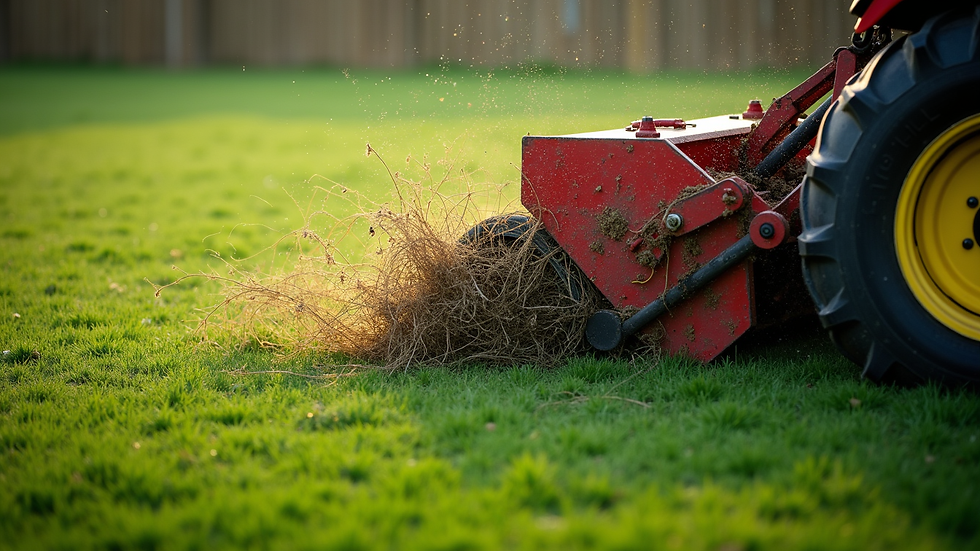
Caption: Scarification removes dead grass and debris to improve lawn health.
How Scarification Benefits Your Lawn and How to Do It Right
Scarification might sound like a fancy term, but it’s simply the process of raking out dead grass, moss, and other debris that builds up on your lawn’s surface. This layer, called thatch, can be a real nuisance. It blocks water, air, and nutrients from reaching the soil and roots.
Why Scarify?
Removes thatch and moss buildup
Prevents lawn diseases caused by damp, dead material
Encourages new grass shoots to grow
Improves soil contact for seeds and fertiliser
When to Scarify:
The best time to scarify is during the growing season when your grass can recover quickly. For most lawns in southern England, early spring or early autumn works well.
How to Scarify:
Use a spring-tined rake or a scarification machine.
Work in one direction first, then cross over at right angles.
Remove the debris collected on the surface.
After scarifying, feed your lawn with fertiliser and water it well.
Consider overseeding to fill in any bare patches.
Scarification can be a bit tough on your lawn initially, but the results are worth it. Your grass will breathe easier and grow thicker and healthier.
Practical Tips for Maintaining a Healthy Lawn Year-Round
Now that you know about these two powerful lawn improvement methods, here are some practical tips to keep your lawn in top shape throughout the year:
Regular Mowing - Keep your grass at the recommended height for your grass type. Avoid cutting more than one-third of the blade at a time.
Water Wisely - Water deeply but infrequently to encourage deep root growth. Early morning is the best time to water.
Feed Your Lawn - Use a balanced fertiliser in spring and autumn to provide essential nutrients.
Control Weeds and Moss - Keep an eye out for unwanted plants and treat them promptly.
Aerate and Scarify Annually - Incorporate these techniques into your lawn care routine to prevent problems before they start.
By following these steps, you’ll create a lawn that’s not only beautiful but also resilient against the challenges of weather and wear.
Bringing It All Together for a Thriving Lawn
Understanding the difference between aeration and scarification, and knowing when to use each, is like having a secret recipe for lawn success. These lawn improvement methods work hand in hand to keep your grass healthy, green, and strong.
If your lawn feels tired, compacted, or clogged with dead material, it’s time to take action. Whether you choose to aerate, scarify, or both, you’ll be giving your lawn the care it needs to flourish.
For those in Bognor Regis, Aldwick, Pagham & Chichester looking for reliable, family-friendly lawn care company for advice then you could contact GK Lawncare services. These techniques are a great place to start. With a little effort and the right approach, your lawn can become the envy of the neighbourhood.
If you want to dive deeper into the benefits and techniques, check out this helpful guide on lawn aeration and scarification.
Happy gardening, and here’s to a lawn that’s as welcoming as your home!


Comments